
What a Near-Death Experience Taught Her About Grief and Living Again
Share on:
About this Podcast
High performers train for volatility in markets, competition, and life. Grief rarely makes that list, even though it can reshape sleep, focus, energy, decision-making, and long-term health.
On a recent episode of The Legacy and Longevity Podcast, host Zach Dancel, COO of Nava Health, spoke with Marybeth Rombach Nelson, a spiritual teacher, intuitive guide, author, Reiki master, and host of the Healing Soul Podcast. Her story includes early loss, a later medical crisis that became a near-death experience, and years spent rebuilding after trauma. The through-line is simple and practical for leaders: grief changes identity, and identity drives behavior.
This post is not a debate about belief systems. It is an operator’s lens on resilience, recovery, and sustained excellence when life knocks the wind out of you.
Grief as a health optimization variable
Grief is not only emotional. It is a physiological load. In the weeks after a major loss, people often see higher stress hormones, disrupted sleep architecture, appetite swings, and a shortened fuse at work. That cocktail can look like burnout or “lost motivation,” yet it is the nervous system trying to re-calibrate.
The data backs the idea that bereavement can hit the body fast. A well-known case-crossover study reported a sharply elevated risk of heart attack in the first 24 hours after the death of a significant person, with risk still elevated during the first week. If you lead a team, this matters. A grieving executive can appear “fine” while their cardiovascular and stress systems run hot. (Harvard Health)
A separate large study focused on partner bereavement found increased rates of major cardiovascular events in the first month, including myocardial infarction and stroke. The signal is clear: grief can be an acute trigger, not just a long, slow ache. (JAMA Internal Medicine)
For high performers who prefer control, this creates a useful reframe. Grief is a performance variable you can manage through recovery inputs, not a moral test you pass by staying busy.
Identity disruption and the long game after loss
Marybeth’s early awakening came after losing her father as a teenager, followed years later by a medical emergency during surgery and an out-of-body experience. Regardless of how a listener interprets near-death experiences, the leadership takeaway is solid: intense brushes with mortality can reorder priorities quickly.
In her account, “success” stopped looking like titles and certainty. Meaning, relationships, and inner steadiness took over. That identity shift is what many high performers struggle to access without a crisis. They keep chasing certainty because it feels productive, then grief arrives and makes the old scoreboard feel irrelevant.
This is where long-game thinking matters. A legacy is not built in the sprint season. It is built in the recovery season too. When grief shows up, leaders often attempt to “outwork” it, stacking meetings and traveling so they do not have to feel anything. That strategy can keep outputs high for a short window, then the bill arrives as insomnia, irritability, anxiety, or health decline.
A stronger play is to accept that grief changes you, then decide what you want it to produce. Not a silver lining story, not a forced positivity routine, but a deliberate identity choice: “I will be the kind of person who processes pain cleanly and still leads well.”
Daily disciplines that protect the nervous system
Marybeth returned again and again to simple, repeatable practices: movement, meditation, time in nature, journaling, and a regular self-check. These are not “soft” habits. They are nervous-system training.
A hard truth is that modern life makes these disciplines harder to execute, and the costs show up globally. In 2022, about 31 percent of adults worldwide did not meet recommended physical activity levels, roughly 1.8 billion people. (WHO) High performers are not immune. They are often the best at ignoring early warning signs.
If you want a practical framework, use a “minimum viable recovery plan” that can run even during chaos.
A simple weekly baseline for high performers
Daily movement that raises heart rate, even if it is a brisk walk.
Short meditation or breathwork that downshifts stress response.
Nature time without audio at least a few times per week.
Journaling that names the real emotion, not the acceptable one.
Sleep protection as a non-negotiable lever for mood and cognition.
On meditation specifically, large organizations like the American Heart Association have reviewed the evidence and concluded that meditation can be a reasonable adjunct for cardiovascular risk reduction, not a replacement for proven therapies. In the scientific statement materials, some studies show modest blood pressure reductions, including a reported 5/3 mm Hg reduction in one randomized study context. (University of Louisville PDF)
This is the peak performance angle: you are not “trying to be spiritual.” You are building recovery capacity so you can make good decisions under load.
Leadership lessons that grief teaches fast
Grief isolates. Isolation quietly erodes health and performance. The newest research continues to show measurable mortality risk associated with social disconnection. A large meta-analysis summary reported social isolation linked with a 32 percent higher risk of all-cause mortality, and loneliness linked with a 14 percent higher risk. (JAMA)
This matters in leadership because top performers often self-isolate as a default. They go private, go quiet, and try to solve it alone. Marybeth’s emphasis on support systems, therapy, and community is not sentimental. It is a risk reduction strategy.
Use grief as a trigger to lead better, not smaller.
Three leadership principles worth stealing
Presence beats perfection. Your team remembers eye contact, attention, and follow-through more than your flawless strategy deck.
Boundaries create safety. Clear limits with toxic dynamics protect your health and your family system.
Consistency beats intensity. Small habits done most days outperform heroic resets that collapse by week three.
Marybeth also described a monthly self-evaluation practice. For high performers, this is gold because it creates a cadence that prevents slow drift.
A 10-minute monthly self-audit
What is my body signaling right now, sleep, appetite, tension, cravings
What feels heavy that I have not processed
What habit has slipped that affects my energy?
What one change would create relief this month
Who do I need to talk with, not text?
That is legacy building in real time: daily disciplines, honest reflection, and relationships that can hold you when life turns.
Living again with intention
A near-death experience gave Marybeth a renewed commitment to hope, healing, and helping others move through grief without getting stuck. You do not need a crisis to choose that path. You can decide that grief will not define you, and you can still let it change you.
Grief can break you open. It should not break you apart. Take your next step with whole-person healing support through food, sleep, movement, and mindset. Explore resources here:
If this resonates, listen to the full conversation on The Legacy and Longevity Podcast and subscribe for more episodes that connect health optimization, peak performance, and legacy building. Explore Marybeth’s work, on her website - Marybeth333.com, or on YouTube.
Follow Legacy and Longevity Podcast:
Website: LegacyandLongevity.com | Facebook: Legacy-and-Longevity-Podcast | YouTube: @LegacyandLongevityPodcast | Instagram: @LegacyandLongevity
Follow Zach Dancel:
Instagram: @ZachDancel | Facebook: Zach.Dancel | LinkedIn: @ZachDancel
Follow Marybeth Rombach Nelson:
Website: Marybeth333.com | YouTube: @MarybethRombachNelson | Facebook: IKnowContentmbLLC | Instagram: @Marybeth_333 | LinkedIn: @Marybeth-Rombach-Nelson | Podcast: TheHealingSoulLLC
#LegacyAndLongevity #MaryBethRombachNelson #HealingSoulPodcast #NearDeathExperience #NDE #Grief #Loss #Healing #Spirituality #Intuition #Reiki #EnergyHealing #TraumaRecovery #DomesticViolenceAwareness #MentalHealth #SuicidePrevention #Mindset #Meditation #VagusNerve #NervousSystem #Yoga #SelfDiscipline #Forgiveness #Purpose #Faith #Afterlife #LifeAfterDeath #Angels #GuardianAngel
Listen & Subscribe
Available on all major podcast platforms
 Spotify
 Apple
Apple
 Amazon Music
 Youtube
Recent Blogs
 Apr 14, 2026
Lindsie Vizethann spent nearly two decades in emergency medicine. She started as a CNA, became a nur...
Read More Apr 07, 2026
Michelle Hirschman has spent 25 years sitting across from people whose lives look extraordinary on t...
Read More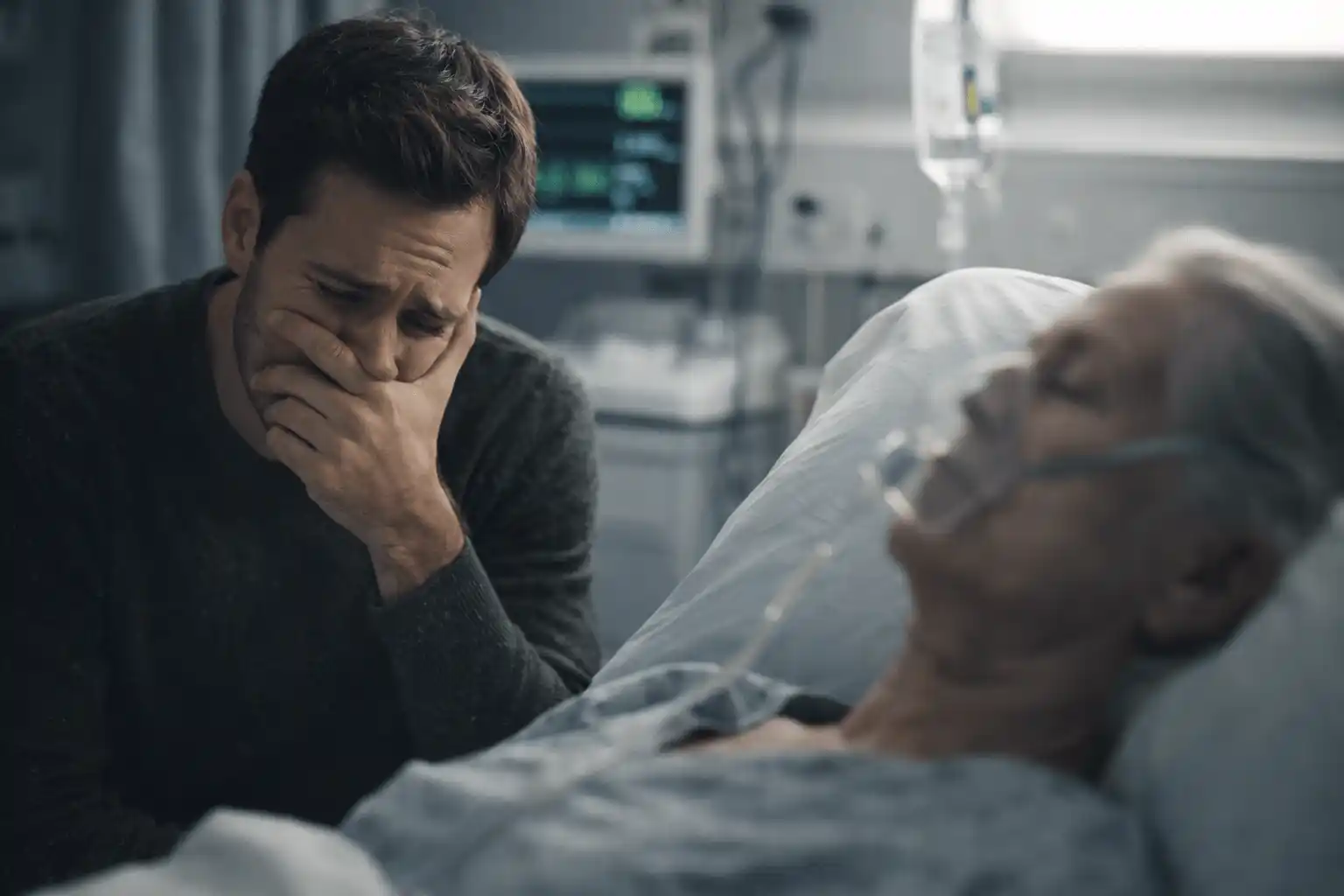 Mar 31, 2026
Anton Neugebauer has spent years inside the operating rooms of longevity and anti-aging clinics, not...
Read More Mar 24, 2026
David Lax walked into a healthcare organization that was replacing half its workforce every year. Pe...
Read More Mar 17, 2026
Lisa Tamati spent 25 years finishing races most people would not start. Death Valley. The Sahara. Th...
Read More Mar 10, 2026
Shannon Getz fainted at work at 22 and woke up surrounded by coworkers, trying to piece together wha...
Read More
Mar 03, 2026
High performers train for volatility in markets, competition, and life. Grief rarely makes that list...
Read More Feb 24, 2026
Jack Graham looked healthy at 26. He could run a fast 5K, lifted heavy, and carried the kind of phys...
Read More Feb 17, 2026
Many people live with chronic fatigue, strange symptoms, and “normal” lab work. They get passed betw...
Read More Feb 10, 2026
Lisa Franz knows burnout in her bones. Working as a police officer in New Zealand, she lived through...
Read More
Comments