Why Your Diagnosis Doesn't Define You But Your Habits Do
Share on:
About this Podcast
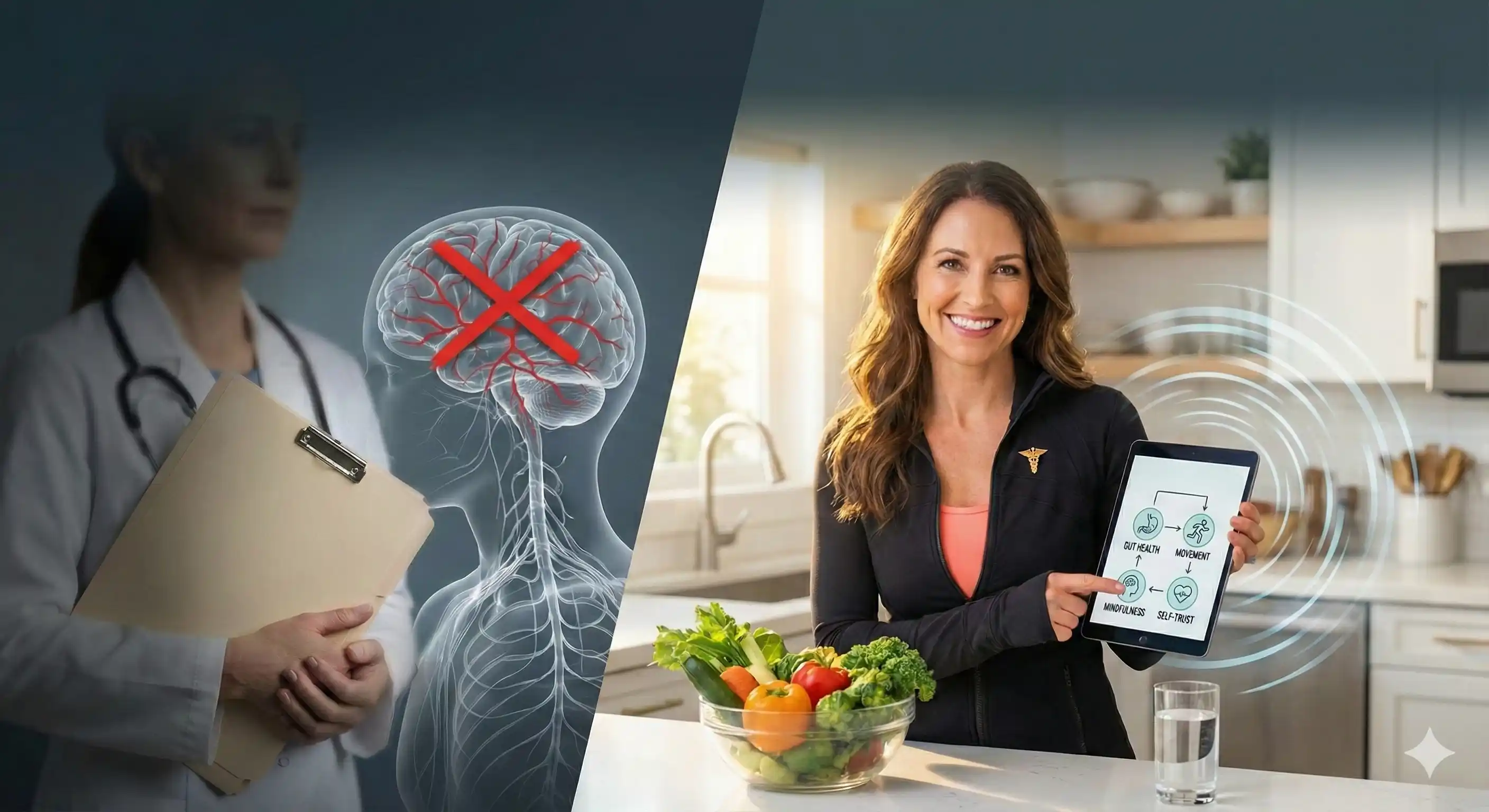
The Pharmacist Who Turned MS Into A Framework . Dr. Amy Behimer was in pharmacy school when she was diagnosed with multiple sclerosis. She understood medicine. She knew the protocols. But when she looked up the textbook definition of health as the absence of symptoms or disease, she thought this is not going to work for us. If health means no disease, then anyone with a chronic condition could never be healthy, creating a hopeless paradigm that shrinks your world instead of expanding it.
On the Legacy and Longevity Podcast with host Zach Dancel, Dr. Amy Behimer reveals why she's confident she'll be healthier because of her MS diagnosis, not in spite of it, how the ABC Habit Playbook helps people close the gap between knowing and doing, and why the real purpose of building habits isn't the habit itself but building self-trust. She explains the Habit Hub for Autoimmune Health covering six lifestyle areas you actually control; why is she asking do I need tough love or gentle love?" keeps you in integrity with yourself, and how one pregnant client eating vegetables with breakfast will impact generations she'll never meet.
Autoimmune Health Not Autoimmune Disease
After her MS diagnosis, Dr. Amy realized everyone fills in the blank after autoimmune the same way. Autoimmune what? Autoimmune disease. Shifting that one word from disease to health changed everything. Autoimmune health means not only the health you still have even with disease, but more importantly, what health will you create because of this diagnosis that you never would have without it.
If she put all focus on how fast she walks or how myelinated her nerves are, she would fit the bill for being unhealthy. But expanding that definition to include gut health, mental health, emotional health, metabolic health, all these levers she has far more control over, suddenly she realizes she has quite a bit of health even with a diagnosis. Fourteen years in, she can point to specific areas flourishing because of MS. She wasn't unhealthy before diagnosis, but she definitely wasn't scrutinizing what she put in her body, the thoughts she fed it, the movement she did to the level she does now.
The ABC Habit Playbook Calms Overwhelm
There is an epidemic of information overload. Even podcast hosts like Dr. Amy and Zach contribute to what Zach calls infobesity. That's why frameworks work so well when trying to get a hold of something like health. Frameworks calm the overwhelm of feeling like you could be doing everything versus having a holistic system that includes all different parts of health and life. Frameworks are sticky, helping your brain remember and use them.
The ABC Habit Playbook pulls strategies from behavior change science including Atomic Habits, Tiny Habits, and The Power of Habit plus some specific to autoimmune disease. You think of them as a playbook where different strategies work for different habits or opponents you're working towards. One play is Trust in the Tiny. It's not just tiny habits, but pairing that with trusting that one minute meditation instead of thirty minute plans will make a difference in nervous system health and consistency. When you have frameworks you can remember, you're more likely to use them.
The analogy is sports. Time spent learning about the playbook should be short. Six minute overview. Then the rest of the time is game time. Get out in life and use it. You don't need to sit and learn more information. You need to learn it for the purpose of turning around and putting it into play to live the life you want to be living. If you work it, it works.
Plan For Obstacles Before They Happen
One play from the playbook is called Habit Hurdles. Someone comes in saying they want to do something seven days a week. Dr. Amy pretends they're meeting back in a week, and it didn't happen. What are the reasons that got in the way? Then they start listing hurdles. Maybe didn't feel like getting out of bed this day. Maybe the kid had an unexpected volleyball game. Maybe the weather was too cold. Maybe they canceled the class.
All those hurdles you can actually plan for because you have a pretty good idea what most will be. Or maybe you just didn't feel like it. Those become exact things you problem solve for. Quincy Jones said I don't have problems; I see puzzles. So hurdles are just puzzles. Make a plan for the moment when you don't feel like it. Make a plan for what happens if a child sporting event pops up. You solve almost in advance. When you're living life in that moment, it doesn't take you off guard because you already talked through how to get around that.
Sometimes one you never imagined will throw you off course during that week. That's a cool part because then you ask what are we going to do next time. Slowly but surely, you identify every hurdle that tries to come up. Then you find the right play, the right strategy to get around it.
Tough Love Or Gentle Love
Another play is called Ask a Better Question. Sometimes, you have a set plan for yourself but may not have the energy. Pushing through really may be a detriment to your body. Dr. Amy arms people with an excellent question to ask in that moment. When you're at a point where you're going to ditch the plan you set for yourself, you had a plan, you want to follow through, you know building this skill, but you're worried you're fatigued and is it smart to push through.
Question to ask yourself is in this moment, we're always going to show ourselves love, that's non-negotiable, but in this moment do I need tough love or do I need gentle love. She can give scenarios in her life and million clients where the exact same scenario has two completely different answers. Only you know the difference. Sometimes you are the best person to give yourself a little tough love and say, Okay, I know my brain's telling me I'm too tired but I can do this. Sometimes, you are the only person who can say no I do need to rest.
Asking that and choosing very on purpose what you're choosing to follow through on is a piece that time and time again she uses it, her clients use it all the time, and it keeps them in integrity with themselves. This question prevents both burnout from pushing too hard and excuse-making from never pushing at all.
Self Trust Not The Habit Itself
As you get started with habits, the whole point isn't even the habit. Let's say it's exercise. The whole point isn't even what strength you're building, what calories you're burning, or what mobility you're getting. The whole first point is to build self-trust that when you say you're going to do something, you're going to do it. That's the consistency builder and habit builder before all of it.
Coming back to that play Trust in the Tiny, trusting that any version that keeps you showing up that day, trusting that is the way you progress; you add on, and you just lay bricks layer by layer. The other stuff starts to feel easier when you become a person who knows, this is Dr. Amy's ultimate goal for anybody who works with her is when you become a person who knows that when you set your calendar and your heart on something you want to do for you, you show up just as if it was a family member.
You just build that trust. It's a transferable skill you can insert anything you want to do into that moment when you show up for yourself. And it really goes a long way. No one is coming to do the work for you. Doctors, nurse practitioners, coaches are guides. Data is feedback. But no one lives in your body except you. You are your own primary care provider, the CEO of your health.
Generational Health Legacy
Dr. Amy had a client who was pregnant and wanted to make some habits before baby was born, so baby never existed in house that didn't have this as the norm. First habit they worked on was eating vegetables with breakfast. Our habits and lifestyle are the only medical intervention that will impact future generations to come. You can go get heart catheterization, you can get surgery, it doesn't impact beyond you.
But anything you do, not by telling people to do it but just by doing it, is a clear legacy. Words aren't even needed. You just live it and people you never will ever meet, great great great greats, will do these things, eat this way, have these beliefs handed down. That's what legacy looks like in practice. Not grand gestures but daily habits that become family culture that ripples forward through time.
Subscribe to Legacy and Longevity Podcast wherever you listen for frameworks that make health changes actually stick and discover why your diagnosis doesn't define you but your habits do.
Discover how to build sustainable health habits before another protocol fails you. Stop collecting information and start mastering behavior change science that creates lasting transformation—discover how, click the link below:
Follow Legacy and Longevity Podcast:
Website: LegacyandLongevity.com | Facebook: Legacy-and-Longevity-Podcast | YouTube: @LegacyandLongevityPodcast | Instagram: @LegacyandLongevity
Follow Zach Dancel:
Instagram: @ZachDancel | Facebook: Zach.Dancel | LinkedIn: @ZachDancel
Follow Dr. Amy Behimer:
LinkedIn: @Amy-Behimer | Website: AmyBehimerCoaching.com
Listen & Subscribe
Available on all major podcast platforms
 Spotify
 Apple
Apple
 Amazon Music
 Youtube
Recent Blogs
 Mar 03, 2026
High performers train for volatility in markets, competition, and life. Grief rarely makes that list...
Read More Feb 24, 2026
Jack Graham looked healthy at 26. He could run a fast 5K, lifted heavy, and carried the kind of phys...
Read More Feb 17, 2026
Many people live with chronic fatigue, strange symptoms, and “normal” lab work. They get passed betw...
Read More Feb 10, 2026
Lisa Franz knows burnout in her bones. Working as a police officer in New Zealand, she lived through...
Read More
Feb 03, 2026
The Pharmacist Who Turned MS Into A Framework. Dr. Amy Behimer was in pharmacy school when she was d...
Read More Jan 27, 2026
Most people think healing starts when symptoms appear. Pain shows up, a diagnosis follows, and treat...
Read More Jan 20, 2026
Your cells don't care about expensive supplements! Renee Belz spent years optimizing nutrition befor...
Read More Jan 13, 2026
Myron Flowers has been training for 30 years. He has trained NFL champions including Vernon Davis, w...
Read More Jan 06, 2026
Dr. Gene Sambataro graduated from dental school in 1980 as valedictorian, giving the commencement sp...
Read More Dec 30, 2025
Dr. Neil Paulvin works behind the scenes with Manhattan CEOs and professional athletes optimizing mi...
Read More
Comments